Finding the right in-oven meat thermometer helps you achieve perfect doneness without guesswork. This guide highlights five top options that blend accuracy, durability, and user-friendly features for American kitchens. Each pick supports safe cooking temperatures, clear readouts, and reliable probes for oven, grill, or smoker use. Read on to compare device capabilities, pros and cons, and how to choose the best thermometer for your cooking style.
| Product | Brand | Notable Feature |
|---|---|---|
| TempPro TP16 Large LCD Digital | TempPro | USDA presets, programmable alerts, wide temp range |
| Escali AH1 Stainless Steel Oven Safe | Escali | Extra large dial, labeled targets, oven-safe |
| TempPro TP17 Dual Probe | TempPro | Dual probes, backlit display, USDA presets |
| CDN Ovenproof Glow Dial IRM200-GLOW | CDN | 2″ glow dial, ovenproof, NSF-certified |
| AWLKIM 2 Pack Stainless Steel | AWLKIM | Dual pack, 2.5″ dial, oven-safe up to 500°F |
TempPro TP16 Large LCD Digital Cooking Thermometer
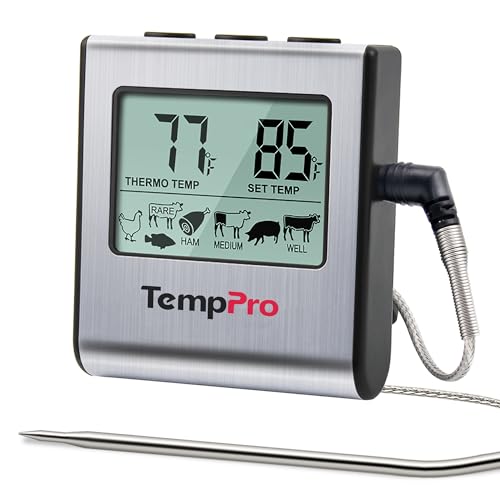
The TempPro TP16 offers a comprehensive cooking thermometer setup suitable for meat, oven, smoker, or stove top use. It includes a programmable timer and USDA preset temperatures that can be adjusted to match personal preferences. The device supports a wide temperature range from 32 to 572 degrees Fahrenheit (0 to 300 degrees Celsius) with a high accuracy of 1 degree resolution, ensuring precise monitoring. Its probe and wire withstand heat up to 716 degrees Fahrenheit, enabling versatile operations across cooking methods. This model integrates a timer with countdown and countup features for flexible kitchen timing.
Escali AH1 Stainless Steel Oven Safe Thermometer

The Escali AH1 features an extra-large 2.5-inch dial with explicit temperature targets labeled for beef, poultry, pork, and veal. Its oven-safe design allows for leaving the thermometer in the meat during cooking, simplifying monitoring without frequent checks. The thermometer covers a range from 140° to 190°F (60° to 87°C), and the dial diameter is substantial for easy visibility behind oven doors. This device is ideal for precise doneness guidance while roasting, grilling, or baking, especially when a clear, quick read is essential.
TempPro TP17 Dual Probe Digital Thermometer

The TempPro TP17 provides dual-probe monitoring with a large backlit display and timer functionality, designed for smokers, grills, and ovens. It includes USDA preset temperatures and the option to manually adjust target temperatures. The dual-probe design enables simultaneous monitoring of two different foods or zones without swapping sensors. Its backlit display supports readability in dim lighting, and the system beeps when alarms are triggered, helping maintain consistent cooking conditions across different pieces of meat.
CDN Ovenproof Glow Dial ProAccurate IRM200-GLOW

The CDN Ovenproof Glow Dial IRM200-GLOW emphasizes an easy-to-read 2″ dial with a black background for low-light readability. It is built to be ovenproof, allowing you to leave it in during roasting without compromising visibility as the dish cooks. The thermometer is marketed as NSF-certified, signaling adherence to professional food-safety standards. Its large display and durable construction make it a practical choice for oven roasts and everyday meat preparation, offering reliable temperature tracking while minimizing the need for door-opening interruptions.
AWLKIM 2 Pack Stainless Steel Thermometers

The AWLKIM two-pack offers a practical value for households that require backup thermometers or simultaneous monitoring of multiple dishes. Each thermometer features a 2.5-inch jumbo dial and a heat-resistant 304 stainless steel probe, rated for oven use up to 500°F. The dual-pack setup is convenient for multi-task cooking, such as roasting a turkey while baking side dishes. Readability is enhanced by the large dial, providing quick temperature checks from across the kitchen and reducing the need to repeatedly peek into the oven.
Buying Guide: Key Purchase Considerations
When selecting an in-oven meat thermometer, consider how you cook most often and what matters most in your kitchen routine. Here are important factors to compare:
- Temperature range and accuracy: Look for a thermometer with a wide range and a fine resolution (1–2 degrees) to track doneness precisely across different meats and ovens.
- Dial vs. digital display: An analog dial is durable and simple, while a digital backlit display offers easy reading in dim conditions. Backlit options are especially helpful for nighttime grilling or oven sessions.
- Probe design and length: Longer probes improve reach and safety, while multiple probes enable monitoring more than one item at a time. Heat-resistant cables prevent damage near high-heat zones.
- Oven-safe capability: If you want to leave the thermometer in the oven during cooking, ensure the device is explicitly rated for oven use and can resist prolonged heat exposure.
- Presets and programmability: USDA preset temperatures save time and reduce guesswork, but the ability to customize targets supports personal preferences and specific recipes.
- Ease of calibration and cleaning: Devices with simple calibration options maintain accuracy over time, and models with removable probes or easy-clean surfaces simplify maintenance.
- Readiness for multi-purpose use: Some thermometers double as grill, smoker, or candy-making tools, offering flexibility across cooking techniques.
- Reliability and certifications: NSF-certified products meet industry standards for safety and performance, increasing confidence in food handling and measurement accuracy.
How to Use an In-Oven Meat Thermometer Effectively
To maximize accuracy, insert the probe to prevent heat conduction from skewing readings. Position the sensing area at the thickest part of the meat, away from bone and fat. Set target temperatures according to the chosen doneness level, or rely on USDA presets if available. Avoid opening the oven door frequently to maintain even heat distribution. For dual-probe models, monitor both zones or meats, and respond promptly to alarms that indicate your preset parameters have been exceeded or reached.
How to Maintain Your Thermometer
Keep probes clean after each use and inspect cables for wear. If a thermometer is labeled oven-safe, follow manufacturer guidelines for long-term exposure. Calibrate when you notice consistent reading drift, following the device’s recalibration process. Store units in a dry, cool place to prevent moisture-related damage and ensure longevity of the electronic components and sensors.
Final Thoughts
Choosing the right in-oven meat thermometer involves balancing readability, durability, and flexibility to fit your cooking style. Whether you prefer a single-probe digital option with USDA presets or a sturdy dual-probe model for multi-item monitoring, the selections above provide reliable performance for home cooks and grilling enthusiasts alike. Use the buying guide to align features with your kitchen routines and maintain precise control over meat doneness.