For Americans seeking water with lower total dissolved solids (TDS), selecting a reputable multi‑stage filter is essential. The following products highlight proven filtration stages, real‑time TDS monitoring, and certifications that support reduction of metals, PFAS, lead, and other contaminants. This guide compares convenient pitcher and under‑sink options to fit various homes and budgets while prioritizing taste, mineral retention, and maintenance simplicity.
| Product | |||
|---|---|---|---|
| ZeroWater 20-Cup Ready-Pour | 5-stage filtration with real-time TDS meter | IAPMO certified to reduce lead, PFOA/PFOS; BPA-free | |
| Culligan with ZeroWater Technology 32-Cup | 5-stage filtration; strong contaminant reduction | IAPMO certified to reduce lead and PFAS | |
| Waterdrop TDS Reduction 15-Cup | 5-stage filtration; preserves minerals | Third-party tested; instant filtration via electric pump | |
| Culligan 10-Cup Pitcher | 5-stage filtration; compact for small spaces | IAPMO certified to reduce lead and PFAS | |
| Waterdrop 10UA Under Sink System | Direct faucet connection; PFAS and lead reduction | NSF/ANSI 42 certified |
ZeroWater 20-Cup Ready-Pour 5-Stage Water Filter Dispenser
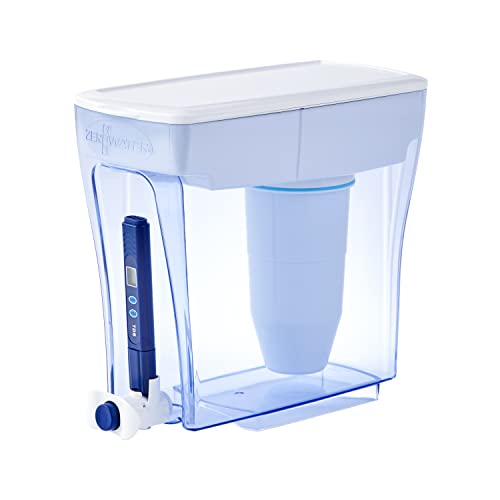
ZeroWater’s 20‑cup Ready-Pour model uses a 5‑stage ion exchange filtration system designed to reduce virtually all total dissolved solids (TDS). The built‑in TDS meter lets users verify when a filter needs replacement, helping ensure consistent taste. The filter is IAPMO certified to reduce lead, chromium, and PFAS/PFOS, and the plastic is BPA‑free. The Ready-Pour design supports convenient pouring and quick filtration for larger families or offices. This option emphasizes real‑time monitoring and a high capacity in a compact footprint.
Key points: (1) Real‑time TDS reading helps maintain water quality without guesswork. (2) Five stages target a broad range of contaminants, including metals and certain PFAS. (3) Certification and BPA‑free construction support safety and compliance. (4) Suitable for households wanting easy, countertop access to low‑TDS water.
Culligan With ZeroWater Technology 32-Cup Dispenser

This 32‑cup dispenser adds a robust 5‑stage filtration system designed to remove a wide array of contaminants. It is certified by IAPMO to reduce lead and PFAS and uses Culligan’s ZeroWater Technology for enhanced impurity removal. The larger capacity makes it ideal for busy households, small offices, or RVs where frequent refilling is a consideration. The filter’s efficiency and extended capacity help maintain taste and clarity over longer periods between changes.
Key points: (1) Expanded capacity supports larger streams of filtered water. (2) Strong reductions of lead, PFAS, chlorine, and other contaminants. (3) Certification provides assurance of performance. (4) Integrated design pairs well with standard kitchen setups and countertop use.
Culligan with ZeroWater Technology 10-Cup Pitcher

This compact 10‑cup pitcher prioritizes space efficiency without sacrificing filtration depth. The 5‑stage advanced filtration is designed to remove 99.9% of dissolved solids, with IAPMO certification confirming reductions in lead and PFAS among other contaminants. It is a practical option for smaller kitchens, apartments, or dorm rooms where a smaller footprint and reliable TDS reduction matter most. The pitcher remains compatible with standard refrigerator storage for chilled water on demand.
Key points: (1) Small footprint fits tight spaces. (2) High filtration effectiveness for TDS and contaminants. (3) Certifications validate reliability. (4) Easy refills and straightforward maintenance.
Waterdrop 10UA Under Sink Water Filter System

The Waterdrop 10UA is designed for under‑sink installation with direct faucet hookup, offering filtration that reduces PFAS, PFOA/PFOS, lead, and chlorine. It emphasizes taste and odor improvement while preserving essential minerals. The system is NSF/ANSI 42 certified for performance and supports a practical, low‑maintenance approach with straightforward cartridge replacements. This option suits homeowners who want filtered water at the kitchen tap without countertop clutter.
Key points: (1) Under‑sink installation keeps countertops clear. (2) Direct faucet connection enables instant access to filtered water. (3) PFAS and heavy metals reduction with mineral retention. (4) Certified filtration performance to support long‑term reliability.
Buying Guide: Key Purchase Considerations And Comparisons
When choosing a water filter to reduce TDS and improve taste, consider the following perspectives:
- Filtration stages and targets: Look for 5‑stage filtration that removes both organic and inorganic solids, with explicit mention of TDS reduction and metals. Multi‑stage systems tend to outperform single‑stage filters in overall contaminant removal and taste improvement.
- TDS monitoring: Real‑time TDS meters help homeowners know when to replace filters, avoiding wasted water and ensuring consistent flavor. Models with built‑in meters offer ongoing feedback without external testing.
- Certifications and safety: IAPMO certification, NSF/ANSI certifications, and BPA‑free plastics add credibility and safety. Certifications indicate compliance with recognized testing standards and real contaminant reductions.
- Capacity and footprint: Choose based on household size and space. Large dispensers suit families or offices, while compact pitchers and under‑sink systems fit apartments and kitchens with limited space.
- Mineral retention vs. demineralization: Some systems reduce almost all TDS, which can strip beneficial minerals. If taste and mineral balance matter, review whether the filter retains essential minerals or aims for complete TDS reduction.
- Maintenance and cost: Consider filter replacement frequency, ease of replacement, and overall cost of ownership. Under‑sink systems may have higher upfront costs but lower per‑liter filtration costs over time.
- Installation compatibility: Under‑sink systems require plumbing connections and may be less portable than countertop options. Ensure compatibility with your faucet and water supply valve sizes.
- Taste outcomes and use case: If you primarily drink water from the fridge, a dispenser with a real‑time meter can be convenient. For cooking or direct faucet use, under‑sink solutions provide ongoing access without countertop clutter.
Overall, the best choice depends on your lifestyle, space, and how actively you want to monitor TDS levels. For households prioritizing visibility of water quality and a robust filter, countertop dispensers with real‑time TDS readings are advantageous. For space‑constrained kitchens or dedicated drinking water at the tap, under‑sink models offer a streamlined solution with strong contaminant reductions. All listed options provide credible filtration performance, with certifications and multi‑stage filters designed to target common TDS components and associated contaminants.