In the kitchen, a sharp chef knife is essential for clean, precise cuts that save time and boost safety. This guide highlights high-performance options designed for American home cooks and professionals alike. Each knife focuses on edge retention, balanced handling, and corrosion resistance, delivering reliable results across vegetables, meat, and fish. Explore five top picks with different steel types, handle designs, and price ranges to suit varied cooking styles and cabinets.
| Product | Brand | Key Feature |
|---|---|---|
| MOSFiATA 8″ Chef’s Knife | MOSFiATA | High carbon German EN1.4116 steel, full tang, Micarta handle |
| Mercer Culinary M22608 Millennia | Mercer Culinary | One-piece high-carbon Japanese steel, ergonomic grip |
| imarku 8″ Japanese Chef Knife | imarku | High-carbon stainless steel, 56-58 HRC, Pakka handle |
| HOSHANHO 8″ Chef Knife | HOSHANHO | Japanese 10Cr15CoMoV steel, 60 HRC, matte blade |
| imarku 7″ Santoku Knife | imarku | 7″ santoku, 15-18° edge per side, hollow edge design |
Note: Each featured knife prioritizes edge retention, corrosion resistance, and ergonomic handling to support repeated, precise slicing tasks in American kitchens.
MOSFiATA 8-Inch Chef’s Knife With Micarta Handle

The MOSFiATA knife uses high carbon German EN1.4116 steel, delivering a robust edge with improved rigidity. A 16° per side hand-polished edge supports precision slicing, while the blade’s laser-engraved pattern provides decoration and anti-sticking benefits. With 15% chromium content, the blade offers corrosion resistance and an anti-tarnish finish. The full tang construction and Micarta handle provide solid balance and a secure grip, reducing wrist strain during long prep sessions.
Mercer Millennia 8-Inch Chef’s Knife
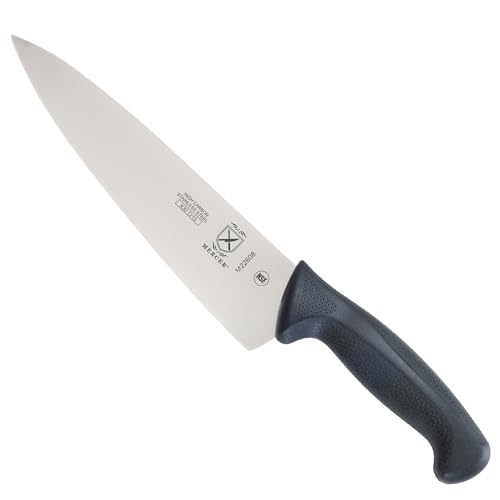
Mercer Culinary’s M22608 features a one-piece high-carbon Japanese steel blade designed for easy edge maintenance and extended sharpness. The ergonomic handle with textured finger points provides a non-slip grip, enhancing comfort and safety during chopping, mincing, and slicing tasks. This knife excels for general kitchen prep, including onions, herbs, and root vegetables, delivering reliable performance with everyday durability.
imarku 8-Inch Japanese Chef Knife
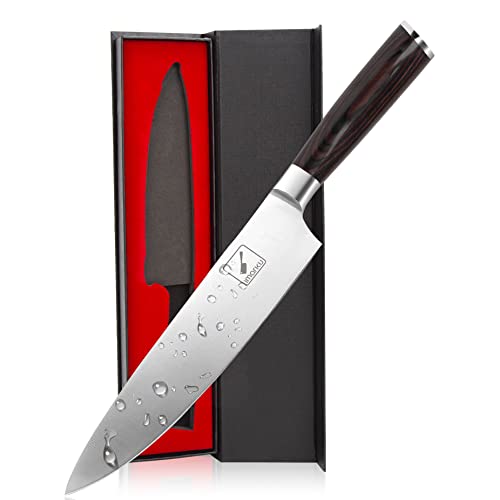
The imarku 8-inch chef knife combines a high-carbon stainless steel blade with a 0.6-0.75% carbon content for improved hardness and edge retention. The blade hardness of 56-58 HRC supports a sharp, durable edge. The Pakka handle, paired with a FSC-certified wood frame, emphasizes comfort and stability. This knife suits daily professional and home use for chopping, slicing, and dicing across a wide range of ingredients.
HOSHANHO Japanese High Carbon Chef Knife

HOSHANHO’s 8-inch chef knife is crafted from Japanese 10Cr15CoMoV steel, delivering exceptional durability and rust resistance. With a high hardness of 60 HRC, the blade maintains a sharp edge through heavy prep work. The matte blade design blends fashion with functionality, and the handle’s design promotes a safe pinch grip to reduce wrist strain during extended cutting sessions.
imarku 7-Inch Santoku Knife
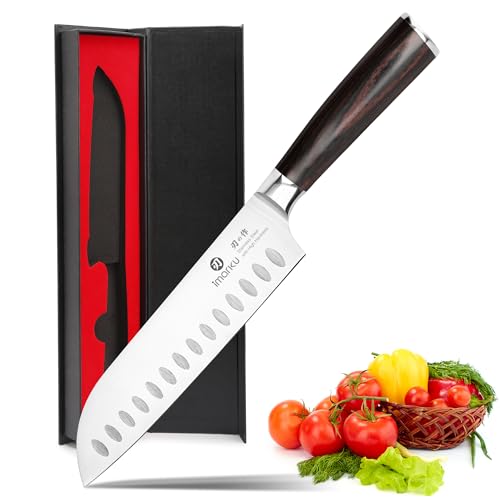
The 7-inch imarku Santoku features a hollow edge design that reduces sticking, making it ideal for precise slicing, dicing, and mincing. The blade’s edge is sharpened to 15-18 degrees per side, delivering a keen cut suitable for delicate vegetables and proteins. This knife is designed for home cooks who want an agile tool for daily kitchen tasks with a balanced, ergonomic grip.
Farberware Edgekeeper 8-Inch Chef Knife

Farberware’s Edgekeeper combines an 8-inch forged blade with a self-sharpening blade cover. The Edgekeeper technology is designed to help maintain blade sharpness with each use. An ergonomically designed handle adds comfort during long prep sessions, while the knife’s versatility supports chopping, dicing, slicing, and mincing across a variety of ingredients.
PAUDIN 8-Inch Chef Knife

The PAUDIN 8-inch chef knife emphasizes professional performance with its high carbon stainless steel blade. It supports a wide range of kitchen tasks, from chopping vegetables to handling meat. The edge is polished by craftspeople to ensure long-lasting sharpness, with a 2mm blade thickness that provides balance between rigidity and flexibility for daily use in busy kitchens.
Babish 8-Inch Chef Knife

Babish’s 8-inch chef knife is forged from a single piece of high-carbon German 1.4116 steel and tempered for a sharp edge. The full-tang ABS handle offers a balanced, comfortable grip for controlled slicing and chopping across proteins and produce. This knife is designed to provide precise cuts with a focus on long-term edge stability.
Buying Guide: Key Purchase Considerations
- Blade material and hardness: Higher carbon content and appropriate hardness (60 HRC or close) improve edge retention but can affect ease of sharpening. Consider stainless vs carbon steel based on your preference for rust resistance and maintenance.
- Blade geometry and edge angle: Narrower angles (around 15-16 degrees) yield sharper edges but may require more care. Some knives advertise 56-58 HRC or 60 HRC—these impact durability and performance.
- Handle design and balance: Full tang construction and ergonomic handles reduce fatigue during extended prep. Micarta, Pakka, or wood composites each offer different grip textures and comfort levels.
- Maintenance needs: Some blades include anti-tarnish finishes and corrosion resistance; others rely on regular oiling and drying after washing. Consider dishwasher safety and cleaning requirements.
- Versatility vs specialization: Chef knives excel for general prep, while Santoku knives can excel at multi-task chopping with hollow edges to reduce sticking. Choose based on your typical tasks.
- Size and weight: An 8-inch blade is standard for many kitchens, offering a balance of reach and control. Lighter blades reduce fatigue, while heavier knives can deliver more power in chopping.
- Warranty and service: Look for brand warranties and customer support. A solid warranty often reflects build quality and confidence from the maker.
- Budget considerations: Prices vary with steel type, handle material, and brand reputation. Align your choice with how often you cook, not just the initial cost.