The basement can be the ideal spot for a dedicated secondary fridge, bringing extra cold storage for drinks, bulk groceries, and seasonal items. Below are five highly relevant options that balance compact footprints with reliable cooling, designed for basement use or other secondary spaces. Each listing highlights capacity, cooling technology, and flexible layouts to help you compare at a glance.
| Product | Brand | Capacity | Key Benefit |
|---|---|---|---|
| Borcolo Mini Fridge with Freezer, 3.3 Cu. Ft. | Borcolo | 3.3 cu ft | Three-zone versatility with a larger freezer section |
| Antarctic Star Compact Refrigerator, 3.2 Cu.Ft. | Antarctic Star | 3.2 cu ft | Double door design with dedicated freezer |
| Antarctic Star Mini Compact Refrigerator, 3.2 Cu.Ft. | Antarctic Star | 3.2 cu ft | Separate freezer and flexible shelving |
| Borcolo Dorm Fridge with Freezer, 3.5 Cu. Ft. | Borcolo | 3.5 cu ft | Compact dorm-friendly with freezer compartment |
| Upstreman 7.0 Cu.Ft Upright Freezer | Upstreman | 7.0 cu ft | Large capacity freezer for bulk storage |
Borcolo Mini Fridge With Freezer, 3.3 Cu. Ft.

Compact design meets practical storage with a total of 3.3 cubic feet across fridge and freezer compartments. The unit fits tight basement corners while offering a larger freezer section (1.3 cu ft) and a dependable R600 compressor for efficient cooling. Temperature can be controlled within a typical cold-to-warm range, aiding in preserving beverages, dairy, and frozen items. Adjustable settings welcome different food needs, making it a flexible addition to a basement storage plan.
Borcolo Dorm Fridge With Freezer, 3.5 Cu. Ft.
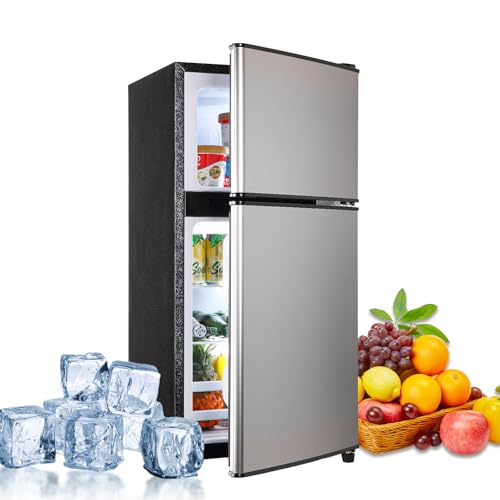
This 3.5 cu ft dorm-sized fridge offers a practical balance of refrigerator and freezer space suitable for small apartments, basements, or offices. The compact footprint supports placement in tight basement nooks while the two-compartment layout keeps frozen items separate from fresh foods. A denser, wrap-around cooling system ensures even temperature distribution, and the adjustable temperature range helps maintain food quality across varying basements climates.
Borcolo Dorm Fridge With Freezer, 3.5 Cu. Ft. – Grey
The grey finish adds a neutral look to basement spaces while maintaining the same functional layout as the silver model. With a 3.5 cu ft total capacity and a separate freezer, you can store a broader selection of items without sacrificing floor space. The temperature control remains flexible, letting you tailor coldness to items like produce, dairy, and frozen goods.
Upstreman 7.0 Cu.Ft Upright Freezer

A standalone upright freezer offers expansive capacity for long-term storage. This model’s 7.0 cu ft interior supports bulk meats, frozen meals, and emergency reserves. Adjustable shelves provide flexible organization for tall containers and bulk items. It’s especially suitable for basements used as a cold storage hub, where occasional larger freezes are needed and a single, tall unit keeps aisles clear and accessible.
Buying Guide: Key Considerations For A Basement Second Refrigerator
- Space and layout: Measure basement alcoves to ensure the unit fits without blocking doors or airflow. Look for compact footprints, adjustable shelves, and door swing directions that suit your space.
- Capacity versus footprint: Decide if you want a dedicated freezer, a dual-compartment fridge/freezer, or a chest/freezer combo. Balance total usable space with the available floor area.
- Cooling performance: Models with R600 or similar efficient compressors and wrap-around cooling help maintain even temperatures in basement environments that may experience humidity or temperature swings.
- Energy efficiency: Opt for energy-star or similarly rated units when possible. Basement temps can affect energy use, so efficient compressors and insulation make a noticeable difference.
- Temperature control: A broad, adjustable range (for example, -4 to 32°F) helps tailor freezing and refrigeration for diverse items, from frozen meats to beverages.
- Organization features: Removable shelves, adjustable racks, and freezer compartments with dedicated spaces improve access and reduce cold air loss when loading items.
- Noise and vibration: Consider quiet models if the basement is near living spaces. Alarm and notification features can help remind you to close doors, but check decibel levels if noise is a concern.
- Durability and warranty: Basement use can expose appliances to higher humidity and temp fluctuations. Look for durable racks and solid builds, and review warranty terms for long-term support.
- Energy cost and maintenance: Frequent door openings in a basement setup can raise energy use. Choose models with good insulation and straightforward maintenance requirements.
- Safety and accessibility: If the unit will be used in a workspace or near stairs, ensure the height is accessible and the door handle design reduces the risk of accidental bumps.