Discover the best rated pressure canners designed for American kitchens. This guide highlights reliable options that balance safety, capacity, and ease of use for home canners. Each model below features robust construction, trusted safety features, and versatility for pressure and water bath canning. Use the buying guide at the end to compare capabilities and determine which unit fits your batch sizes and stove type.
| Product | Brand | Capacity | |
|---|---|---|---|
| T-Fal 22-Quart Aluminum Pressure Canner | T-Fal | 22 quarts | Large batches, versatile canning methods |
| Presto 01781 Pressure Canner and Cooker | Presto | 23 quarts | USDA-safe canning method; boiling water option |
| Presto 02152 17-Quart Digital Pressure Canner | Presto | 17 quarts | Digital display; no altitude adjustments |
| Supa Ant Pressure Canner 23 Qt | Supa Ant | 23 quarts | Starter kit included; safety-focused design |
| Presto 01784 23-Quart Induction Compatible Canner | Presto | 23 quarts | Induction-ready; USDA-approved |
Note: The table reflects five top-rated models suitable for a range of batch sizes, stove types, and preferences for digital vs. manual controls. Each product section below provides a deeper look at features and practical considerations.
T-Fal 22-Quart Aluminum Pressure Canner

Built from durable aluminum, this 22-quart pressure canner supports large batches of low-acid foods using USDA-recommended pressure canning methods. It also accommodates boiling-water canning for high-acid foods like fruits and jams. The vessel is designed for even heating and easy maintenance, making it a reliable centerpiece for seasonal canning. With a spacious interior, it can hold up to 24 half-pint jars or multiple full-size jars per cycle. The included racks and a canning guide help streamline setup and processing for beginners and seasoned canners alike.
Presto 01781 Pressure Canner and Cooker, 23 qt

This model is a classic, offering USDA-approved canning for vegetables, meats, poultry, and seafood, plus a boiling-water canner option for fruits, jams, pickles, and salsa. Its warp-resistant aluminum ensures fast, even heating, and it works on regular and smooth-top ranges. The large capacity expands batch size and is supported by a long warranty, providing long-term reliability for frequent canners. It’s well-suited for households that want a versatile tool that handles both pressure canning and high-volume water bath canning with ease.
Presto 02152 17-Quart Digital Pressure Canner

The 17-quart digital canner emphasizes automated control for simple, reliable results. It supports both pressure canning and water bath canning, accommodating larger batches without manual adjustments for altitude. An automated system helps maintain consistent temperature and pressure, which can reduce guesswork and improve safety. This model is ideal for cooks who appreciate a crisp digital readout and a compact footprint while still delivering ample capacity for regular canning projects.
Supa Ant Pressure Canner 23 Qt

The Supa Ant 23-quart unit is designed for efficient, safe canning with a comprehensive starter kit. It includes a rack, jar lifter, magnetic lid lifter, bubble popper, and other essential tools to support a complete canning session. A robust locking lid, overpressure plug, and air vent design enhance safety during processing. The product is compatible with large batch processing and offers flexibility for canning jars of various sizes, making it a strong choice for families with frequent canning needs.
Presto 01784 23-Quart Induction Compatible Canner
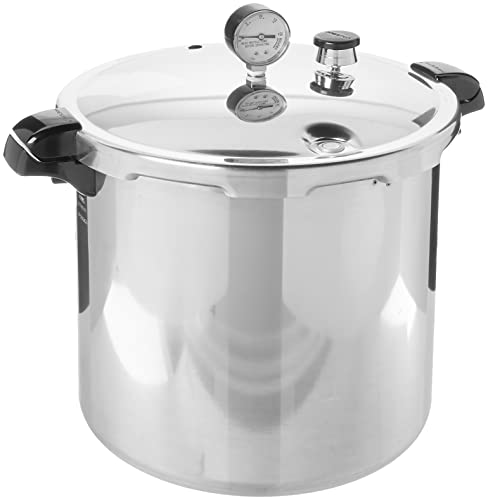
This induction-compatible model offers a modern option for households with induction cooktops, while also functioning on gas, electric, and smooth-top stoves. It’s designed to meet USDA guidelines for safe canning of vegetables, meats, poultry, and seafood and includes a precise pressure gauge for accurate processing. The dual-function design doubles as a boiling-water canner, which broadens its use for high-acid foods such as fruits and salsas. It’s a strong fit for buyers seeking versatility and compatibility with contemporary stoves.
Buying Guide: Key Purchase Considerations
When choosing a rated pressure canner, several factors influence long-term satisfaction and safety:
- Capacity and batch size: Larger models (20–23 quarts) are ideal for frequent canners or large harvests, while smaller options (12–17 quarts) fit kitchen space and smaller batches.
- Safety features: Look for locking lids, overpressure plugs, venting mechanisms, and clearly labeled gauges. Models with digital controls reduce manual adjustments and may improve consistency.
- Material and heat distribution: Aluminum canners offer fast heating and even heat distribution. Stainless steel options are durable and work well on induction ranges.
- Alitude considerations: Some models require manual adjustments at high elevations; others automate or obviate altitude changes, reducing guesswork.
- Functionality: Decide between pressure canning, boiling-water canning, or both. Some units also double as pressure cookers, expanding versatility for everyday cooking.
- Induction compatibility: If using an induction cooktop, ensure the unit is labeled induction-ready to avoid performance issues.
- Included accessories: Racks, jar lifters, bubble removers, and instructional guides can simplify setup and operation, especially for beginners.
- Maintenance and warranty: A longer warranty reflects build confidence; check for warp resistance and ease of cleaning.
Practical considerations suggest aligning your selection with your typical batch size, stove type, and how often you plan to can. Digital models provide convenience and precision, while traditional dial gauges can appeal to users who prefer tactile feedback and straightforward operation. Safety should always be the top priority, closely followed by capacity and compatibility with your preferred canning methods.