Finding the right pH meter for kombucha helps you monitor fermentation accurately and safely. This guide highlights five reliable options that balance affordability, accuracy, and ease of use for home brewers. Each entry includes quick specs, practical uses, and how it fits into a consistent kombucha workflow. Read on to compare tools that support precise acid-management from starter to finished brew.
Summary of selected products
| Product | Brand | Measurement Type | Key Benefit |
|---|---|---|---|
| Kombucha Chemistry pH Test Strips | Kombucha Chemistry | 0–6 pH (0.5 intervals) | Quick, pre/post fermentation strips specific to kombucha |
| Fermentaholics Kombucha pH Strips | Fermentaholics | 0–6 pH | Easy, color-chart comparison for rapid checks |
| EZTOCH Food pH Meter | EZTOCH | 0–14 pH | Versatile for food fermentation, baking, and brewing |
| GIDIGI pH Meter for Food | GIDIGI | 0–14 pH | Direct measurement for solids and semi-solids with a spear tip |
| VIVOSUN Digital pH Meter | VIVOSUN | 0–14 pH | 3-in-1 with TDS/EC, suitable for hydroponics and fermentation |
Kombucha Chemistry pH Test Strips For Kombucha

Kombucha Chemistry’s pH test strips are designed specifically for kombucha testing, covering both pre- and post-first fermentation. The strips provide 0.5 pH interval markers, helping brewers quickly verify acidity levels during key stages. Each strip is thick and individually cut to avoid tearing, simplifying testing between brew steps. This kit is ideal for hobbyists seeking reliable, rapid checks without specialized equipment. Use them to establish baseline acidity before flavoring and to confirm safe finished pH ranges.
Fermentaholics Kombucha & Fermentation pH Strips

Fermentaholics’ pH strips provide a straightforward way to monitor acidity for kombucha, beer, wine, mead, and other ferments. The 0–6 pH range and a simple dip-and-compare method allow quick checks during initial ferment, secondary ferment, and final adjustments. The strips are designed for rapid, repeatable readings, making them suitable for brewers who want a reliable, low-cost option to track fermentation progress and ensure safety.
EZTOCH Food pH Meter For Fermentation And Cooking
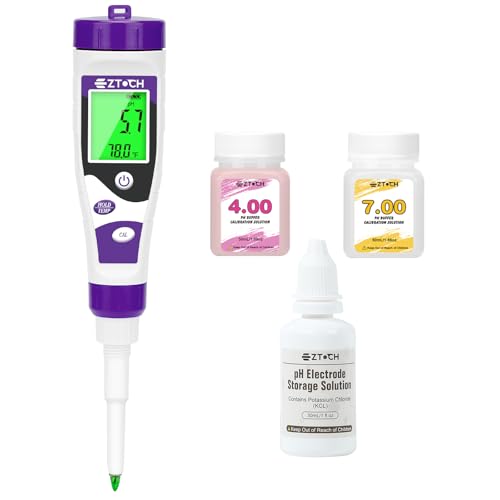
EZTOCH’s multifunction pH meter is positioned for food fermentation, canning, and cooking. It supports measuring pH in various foods and liquids, including water, meat, sauces, and dairy. The meter emphasizes versatility, including use in sourdough and beverage fermentation like kombucha. The Bluetooth feature and easy calibration options help track readings over time, making it useful for brewers who want to log data across batches and adjust recipes consistently.
GIDIGI pH Meter For Food Fermentation And More

GIDIGI’s pH meter for food is tailored for fermentation tasks, including sourdough, hot sauces, dairy products, and kombucha. The spear-tip design enables direct measurement inside semi-solid foods, reducing the need to slurry samples. The open junction minimizes clogging from solids, while the PVDF body and conical tip ensure stable readings in diverse food matrices. This meter suits home brewers who ferment sauces, cheeses, and other foods in addition to beverages.
VIVOSUN Digital pH Meter For Hydroponics And Fermentation

VIVOSUN’s digital pH meter is designed for broad use, including hydroponics, pools, and fermentation. It features 0–14 pH measurement, a readable LCD display, and a compact pocket-sized form. The meter is noted for quick, reliable calibration and a backlit screen for dim environments. In kombucha workflows, it can provide precise measurements during both fermentation stages and after bottling, helping maintain target acidity across batches. Pair it with pH buffers for consistent results.
Ruolan pH Meter For Quick Home Checks
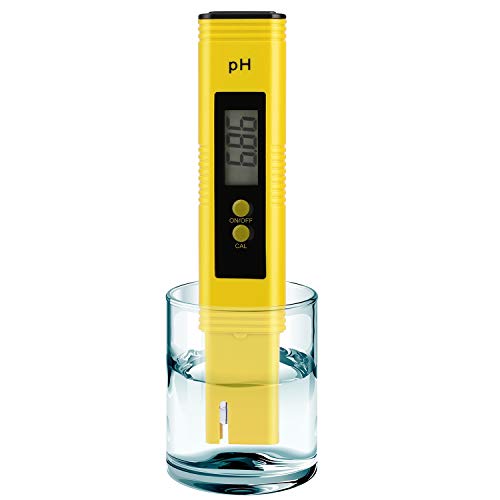
Ruolan offers a compact, pocket-friendly pH meter with a 0–14 pH range, designed for home testing. It emphasizes portability and quick checks, making it convenient for brewers who want to test batches without carrying larger equipment. While not as feature-rich as some premium meters, it serves as a dependable, budget-friendly option for basic kombucha monitoring, especially in small kitchen setups or when traveling between batches.
Buying Guide: key considerations for choosing a kombucha pH meter
- Measurement range and precision: For kombucha, aim for meters that cover at least 0–14 pH with 0.1 pH or better accuracy. Strips are adequate for quick checks in the 0–6 range, but digital meters offer precise readings across the full spectrum.
- Type: Strips vs. digital meters. Strips are affordable and simple for routine checks but less precise. Digital probes provide numeric exactness, beneficial for tracking fermentation curves and recipe consistency.
- Calibration and maintenance: Look for meters that include calibration powders or buffers and easy recalibration steps. Regular calibration improves repeatability across batches.
- Probe design and compatibility: Probes for solid or semi-solid foods (spear tips) are useful for viscous ferments, while standard probes work well for liquids like brewed tea and starter cultures.
- Portability and durability: For home brewers who test across multiple locations or during events, a compact, rugged meter with a clear display is advantageous.
- Data logging and connectivity: Bluetooth-enabled meters and tablets or apps let you track fermentation data, pH trends, and batch notes over time, supporting more consistent flavor profiles.
- Ease of use and speed: Quick response times and intuitive interfaces reduce testing friction during active fermentation, particularly for beginners.
- Versatility: If you brew other ferments (sauces, yogurt, pickles), choose meters rated for a wide range of samples and compatible with food-grade buffers and tips.
- Cost vs. value: Strips vs. digital meters—balance upfront cost with long-term reuse and maintenance to determine the best fit for your hobby or small kitchen operation.
Additional notes on testing strategy for kombucha
Official kombucha brewing often targets a safe window of acidity that supports SCOBY health and flavor development. Use test strips for quick daily checks during early fermentation to detect major shifts, and switch to a digital meter for precise tracking as you move toward finish. Maintain clean equipment and calibrate after each major batch to ensure consistency. Record pH readings alongside batch notes to identify patterns that influence tang, aroma, and carbonation.
Overall, a mix of simple strips for frequent checks and a precise digital meter for final validation provides a practical, reliable approach for home kombucha fermentation. The five options above cover a range of needs from budget-friendly to feature-rich, enabling you to choose the setup that best fits your brewing style and goals.
Buying decisions should balance accuracy, ease of use, and how much data you want to track over time. Regardless of the tool, consistency in testing practice will help you achieve repeatable, safe, and satisfying brews.