Choosing a nutritional food scale can simplify meal planning, keto and paleo goals, and weight management by providing precise macro and calorie data. The following five scales integrate built‑in nutrition databases or app connectivity to help you monitor intake across multiple nutrients. Each option supports weight in grams and ounces, offers easy tare functions, and pairs with mobile apps or offline data for consistent tracking. Explore practical features, data depth, and how they fit different lifestyles.
| Product | Brand | Key Benefit |
|---|---|---|
| Etekcity Smart Food Kitchen Scale with Nutritional Calculator | Etekcity | App-based nutrient tracking (19 nutrients) and large data access |
| Greater Goods Food Scale with Nutrition Calculator | Greater Goods | Offline nutrition data with clear label-style display |
| Cosori Smart Food Kitchen Scale with Nutritional Calculator | COSORI | AI scan, 19 nutrients, and on-screen nutrient info |
| Ultrean Smart Food Kitchen Scale with Nutritional Calculator | Ultrean | AI recognition and 20 nutrients for meal tracking |
| KUAIVO Smart Nutrition Food Scale | KUAIVO | Bluetooth app for 23 nutrient data points and insights |
Etekcity Smart Food Kitchen Scale With Nutritional Calculator

The Etekcity model integrates a health‑focused nutrition calculator that tracks up to 19 nutrients through a free Vesync app. The scale connects with Apple Health and Fitbit, enabling trend panels and periodic nutrition reports. Its data backbone is Nutritionix, offering a vast database to minimize manual entry and support customization for new foods. The durable food‑grade 304 stainless steel top ensures easy cleaning and long‑term use in busy kitchens. Users can monitor daily, weekly, and monthly trends, making it suitable for weight management and dietary adjustments.
Greater Goods Food Scale with Nutrition Calculator
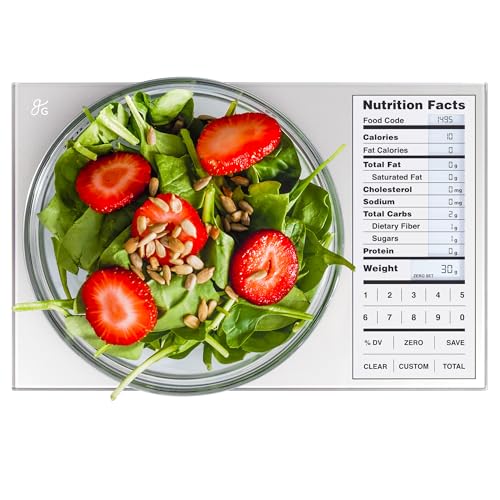
This scale emphasizes offline convenience with built‑in nutrition data, eliminating the need for apps or accounts. It doubles as a practical food scale for general measurements, while offering a code lookup app for optional macro tracking. The bright backlit nutrition label display presents calories, protein, carbs, fats, and sodium clearly for the 2,000 pre‑loaded foods and up to 99 custom entries. It’s a strong option for users who prefer privacy or don’t want to manage complex app ecosystems.
Cosori Smart Food Kitchen Scale With Nutritional Calculator

Cosori’s scale adds AI scanning and a robust nutrition profile with 19 nutrients. The device supports a wide measurement range and a precise 1‑gram increment system for accurate portions. Its 7 weight units, including ml for water and milk, facilitate precise kitchen calculations. With on‑screen nutrient data and goal tracking, users can pursue dietary strategies such as macro balancing and calorie control. The app ecosystem and data depth make it suitable for athletes, dieters, and meal preppers who value real‑time insights at a glance.
Ultrean Smart Food Kitchen Scale With Nutritional Calculator

Ultrean emphasizes a wide nutrition footprint with 20 nutrients and AI food recognition for easier meal tracking. A rechargeable design helps reduce battery waste, and the scale weighs up to 33 pounds with four high‑precision sensors to deliver accurate results from 1 g to 15,000 g. The tare function simplifies measuring multiple ingredients, while barcode scanning (in the US) adds convenience when weighing familiar items. This model suits households focused on comprehensive nutrient awareness, portion control, and long‑term dietary planning.
KUAIVO Smart Nutrition Food Scale
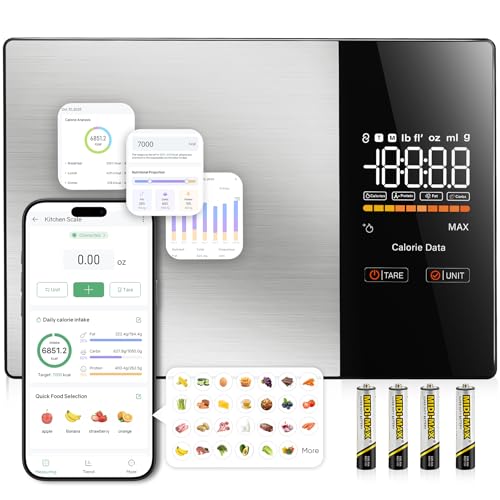
KUAIVO pairs a bright LED display with Bluetooth app connectivity to log 23 nutrient metrics. It’s designed for precise tracking of calories, fats, carbs, and proteins as you weigh foods. The app history and visual reports enable daily, weekly, and monthly insights into eating patterns, helping with meal planning and goal tracking. The scale focuses on intuitive use and clear nutrient visibility, making it suitable for those who want a smart, data‑driven approach to nutrition without complexity.
Buying Guide
Key purchase considerations help tailor a nutritional scale to your needs. First, data depth matters: some scales offer offline nutrition databases, while others rely on app integrations and cloud data. If you want privacy, a standalone scale with built‑in nutrition data is a solid choice. For those who prefer dynamic tracking across devices, look for app connectivity with support for Apple Health, Google Fit, Fitbit, or other platforms.
Second, integration and usability influence daily use. Consider how many nutrients you need tracked (19–23 nutrients is common) and whether you want barcode scanning or AI food recognition to quick‑start logging. A clear, backlit display helps in bright or dim kitchens, and a tare function ensures easy measurement of multiple ingredients without resets.
Third, hardware quality affects durability and ease of cleaning. Stainless steel weighing platforms resist staining and are easier to sanitize, a practical benefit for frequent cooking or meal prep. Weight range and increment granularity determine portion control accuracy, with common increments of 1 g and a maximum of 11–33 lb depending on the model.
Fourth, privacy versus convenience should guide your choice. Scales with offline nutrition data allow private tracking without accounts, while app‑connected models provide deeper dashboards, trend analytics, and long‑term progress tracking. Decide whether you value on‑device data or cloud insights for your lifestyle goals.
Finally, price and ecosystem openness matter. A model offering a wide food database plus the ability to add custom foods covers both common and unique items. If you frequently weigh homemade recipes, ensure the scale supports custom entries and offers flexible unit options for accurate logging in grams, ounces, and milliliters.
In summary, these five nutrition scales provide a spectrum of data depth, connectivity, and form factors. Your choice should align with how you log foods, the level of detail you need, and whether you prefer standalone accuracy or interactive dashboards that map your nutritional progress over time.