Choosing a Damascus meat cleaver means balancing edge retention, weight, and comfort for daily kitchen tasks. The following options combine high-quality steel, robust construction, and ergonomic handles to handle bones, vegetables, and tough cuts with confidence. Below you’ll find five top picks with distinct strengths to match different cooking styles and needs.
Summary of Selected Products
| Product | Brand | Key Strength | Blade Type |
|---|---|---|---|
| SYOKAMI Meat Cleaver Chef Knife | SYOKAMI | 2-in-1 blade design with bone-chopping section | Damascus-pattern steel, 7.7 inch |
| Huusk Meat Cleaver Knife Japanese 6.4 Inch | Huusk | Hand-forged traditional craft, high-carbon steel | Damascus-pattern, 6.4 inch |
| SODEN 7 Inch Cleaver | SODEN | VG-10 Damascus steel core, superior edge retention | Damascus-clad, 7 inch |
| Huusk 7 Inch Cleaver Knife | Huusk | Wide blade for large ingredients, sharp edge | VG-10 core, Damascus-style |
| MOKEEN Cleaver Knife 7 Inch | MOKEEN | 67-layer Damascus steel with full tang | Damascus pattern, 7 inch |
SYOKAMI 7.7-Inch Damascus Meat Cleaver

The SYOKAMI meat cleaver features a split blade design that combines a chef-style slicing zone with a bone-chopping rear section. The front is sharpened to 15° per side for vegetables, boneless meat, herbs, and everyday prep, while the rear 30° per side section handles tougher cuts. This full-tang cleaver provides a balanced feel for daily kitchen tasks and the wide blade aids ingredient transfer and garlic crushing. Shock-absorbing holes help reduce rebound for more controlled chopping, improving comfort during longer prep sessions.
Huusk 6.4 Inch Hand Forged Cleaver

Huusk cleavers are hand-forged by Japanese craftsmen using 1095 high-carbon steel, repeatedly folded and hammered to build strength and balance. The blade is honed to a 12° edge for precise cutting, with a broad, curved profile that supports rocking motions. This 6.4-inch chef knife excels at meat, vegetables, and fish, delivering smooth cuts while preserving flavors and reducing sticking due to its hammered texture.
SODEN 7 Inch VG-10 Damascus Cleaver
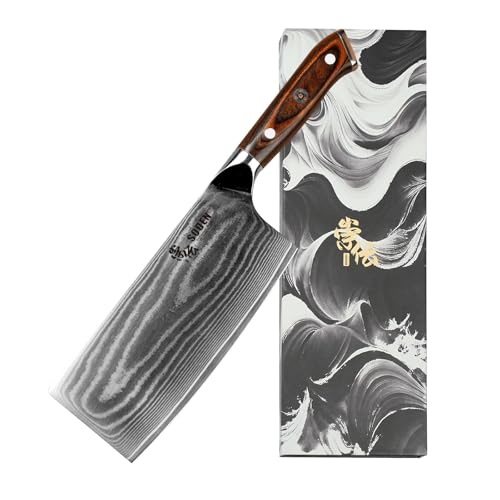
This professional-grade cleaver features a VG-10 Damascus steel core wrapped in Damascus cladding for exceptional sharpness, edge retention, and rust resistance. The full-tang, ergonomic handle promotes safety and control during heavy use, making it suitable for chopping through bone, cartilage, and frozen meat with leverage and reduced fatigue.
Huusk 7 Inch Cleaver Knife

Huusk’s 7-inch cleaver combines a wide blade with a lower center of gravity for efficient handling of larger ingredients. The knife uses high-carbon steel with a 58±2 HRC hardness, maintaining a sharp edge for longer and delivering consistent cuts. The blade’s 15-degree ground edge supports precise slicing through meat and vegetables, while the unique handle design aims to reduce fatigue during extended use.
MOKEEN 7 Inch Damascus Cleaver

The MOKEEN cleaver is forged from 67 layers of Damascus steel with a full tang and a brown wood handle designed for balance and grip. The blade undergoes vacuum heat treatment to achieve around 60±2 HRC, delivering strong edge retention and a robust, all-purpose cutting surface suitable for vegetables, fruits, fish, and meats. The wooden handle and right-angle blade-handle junction emphasize stability during heavy chopping tasks.
Buying Guide
Key purchase considerations help buyers choose the right Damascus meat cleaver for their kitchen needs. The following perspectives cover practical aspects and maintenance requirements.
Blade material and construction
Look for VG-10 or 1095 high-carbon steel cores with Damascus-clad exterior for a balance of hardness, sharpness, and corrosion resistance. Damascus layering improves edge retention and provides a distinctive pattern, but buyers should consider how the cladding affects weight and balance. Full-tang designs generally offer better handling and durability for heavy-duty chopping.
Edge geometry and sharpening
Blade angles around 12°–15° per side can yield a sharp, smooth cut for meat and vegetables. Some cleavers feature two-zone edges—one for slicing and another for bone-cutting. Regular maintenance, including drying after use and oiling, helps prevent rust and prolongs blade life.
Size, weight, and balance
Cleavers range from about 6.4 to 7.7 inches in blade length. Heavier blades deliver more chopping power but can tire the wrist; lighter blades offer speed and precision for delicate tasks. A well-balanced knife reduces fatigue and improves control during long prep sessions.
Handle design and ergonomics
Wooden, full-tang handles with three-rivet construction provide stability and a comfortable grip. Some handles feature ergonomic contours or textured surfaces to reduce slippage. Consider your grip style, hand size, and whether a sheath is included for safe storage and transport.
Maintenance and care
To preserve Damascus patterns and edge integrity, hand wash and dry thoroughly. Apply a light coat of food-safe oil after cleaning to guard against rust. Store with a blade cover or sheath to protect the edge and prevent accidents in the kitchen. Regular honing and periodic professional sharpening extend the knife’s effective lifespan.
Use case and versatility
Choose a cleaver based on intended tasks: bone chopping and heavy-duty meat work demand sturdier, thicker blades with robust edge geometry, while vegetable and fish prep benefit from lighter, sharper edges. Some models incorporate dual-zone blades for versatile daily cooking, reducing the need for multiple knives.
These options provide varied approaches to Damascus meat cleavers, from hand-forged classics to high-tech VG-10 constructions. Consider your typical recipes, kitchen size, and maintenance preferences to select a cleaver that best fits your cooking routine.