Finding the right carbon steel chef knife can elevate everyday prep into a precise culinary routine. This guide highlights five highly regarded knives, emphasizing sharpness, edge retention, and ergonomic design. Each option reflects strong performance in a kitchen that values durability, corrosion resistance, and comfortable handling. Read on to compare steel types, blade geometry, and grip construction to help you choose the best carbon steel chef knife for your cooking style.
Summary of Selected Products
| Product | Brand | Core Steel / Style | Key Feature |
|---|---|---|---|
| HOSHANHO Kitchen Knife in Japanese High Carbon Steel | HOSHANHO | 10Cr15CoMoV high carbon steel | 60 HRC, matte blade, ergonomic rosewood handle |
| Babish 8-Inch Chef Knife | Babish | German 1.4116 high-carbon steel | Single-piece forged, full-tang, sharpness |
| imarku Japanese Chef Knife | imarku | High-carbon stainless steel (0.6-0.75% C) | High durability, ergonomic Pakka handle |
| SHAN ZU Japanese Knife Set 3 PCs | SHAN ZU | 10Cr15Mov high carbon steel, laminated | 62 HRC, matte finish, versatile set |
| YOKASHI Dragon Japanese Chef Knife | YOKASHI | Damascus VG-10 (67 layers) | 60+ HRC, ergonomic G10 handle |
HOSHANHO Kitchen Knife In Japanese High Carbon Steel

The HOSHANHO 8-inch chef knife uses a Japanese high-carbon steel core, specifically 10Cr15CoMoV, designed for superior edge retention and rust resistance. With a hardness rating up to 60 HRC, the blade maintains sharpness through daily tasks such as chopping vegetables and slicing meats. The matte blade finish blends aesthetics with durability, while ice tempering and heat treatment enhance resistance to temperature changes and moisture. The handle combines durability and comfort through an ultra-durable wood construction, featuring a distinctive sloped bolster to encourage a pinch grip for safer, more controlled cuts.
Designed for both professional kitchens and home cooks, this knife emphasizes balance and control. The blade geometry supports precise, forward-motion cutting, helping reduce wrist fatigue during extended prep sessions. While the core delivers performance, the outer cladding adds corrosion resistance and wear protection, making it suitable for regular use in busy kitchens. The combination of Japanese steel, tempered treatment, and ergonomic handling positions this as a strong choice for those who value sharpness and longevity in their carbon steel tools.
Babish 8-Inch Chef Knife

Babish presents an 8-inch chef knife forged from a single piece of high-carbon German 1.4116 steel, then tempered, tapered, and polished to deliver exceptional sharpness. The full-tang ABS handle provides a balanced grip, helping reduce fatigue during long prep sessions. This knife’s construction emphasizes rigidity and durability, making it suitable for precise slicing and chopping tasks—from herbs to proteins. The integral blade geometry is designed to hold a sharp edge while resisting bending or chipping under regular use.
Edge maintenance is straightforward: the steel’s high carbon content supports a durable cutting edge, while the knife’s overall balance makes it suitable for a variety of cutting techniques. While some carbon steel knives favor single-ingredient performance, Babish’s practical design supports a wide range of kitchen tasks. The knife’s robust construction, combined with a comfortable grip, makes it a dependable option for both new cooks and seasoned chefs seeking reliable, high-sharpness performance.
imarku Japanese Chef Knife
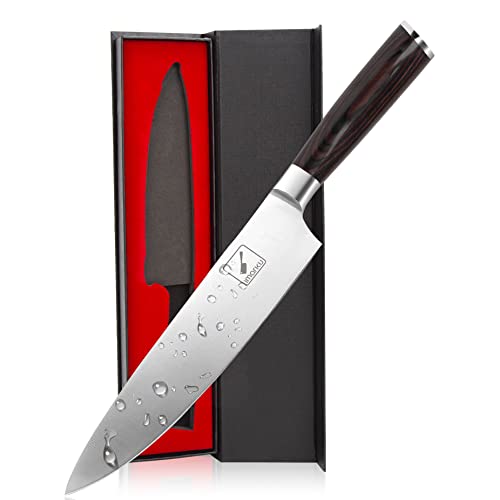
The imarku 8-inch chef knife uses a high-carbon stainless steel blade with 0.6-0.75% carbon, delivering increased hardness and edge retention compared with many standard stainless knives. The knife is rated at an HRC of 56-58, indicating solid toughness for everyday kitchen tasks such as dicing and mincing. Designed for multipurpose use, it handles slicing, chopping, and precision work with relative ease. The Pakka handle improves grip quality and minimizes fatigue, while the FSC-certified wood frame adds a touch of sustainability and natural aesthetics to the knife.
Maintenance considerations include keeping the blade dry to prevent corrosion and occasional honing to maintain a razor edge. This knife offers a balanced blend of hardness, sharpness, and ergonomic comfort, making it a practical option for cooks who want a reliable carbon steel knife without sacrificing everyday usability or comfort during extended prep sessions.
Brewin CHEFILOSOPHI 5-Piece Knife Set

The Brewin Chefilosophi set brings professional kitchen knife design into a five-piece bundle. Made from 1.4116 German stainless steel, the blades are forged from a single piece and tempered to a Rockwell hardness around 56+. The set emphasizes accuracy, edge retention, and durability across multiple knife sizes. An elegant red pakkawood handle design contributes to a comfortable grip and a refined kitchen aesthetic. The collection is intended for serious cooks who want a cohesive set capable of handling various tasks—from mincing herbs to carving meats.
Quality control emphasizes rigorous inspection and a focus on high standards, with the brand positioning itself as a premium choice for professional use or discerning home chefs. The blades’ durability and corrosion resistance make them reliable under frequent use, while the variety of blades supports a broad range of culinary techniques. Users should consider their typical tasks and storage options when evaluating whether a five-piece set best aligns with their cooking style and space.
SHAN ZU Japanese Knife Set 3 PCs

This three-piece SHAN ZU set features high-carbon 10Cr15Mov steel with laminated plating for enhanced durability and corrosion resistance. The blades achieve up to 62 HRC, supporting wear resistance and long-term sharpness. The matte finish on the blade combines a modern aesthetic with practical slip resistance, helping maintain control during precise cuts. The set prioritizes versatility, making it suitable for both professional kitchens and home chefs who require sharpness across various tasks, such as vegetable prep and meat slicing. The ergonomic Pakkawood handle adds comfort with a classic look.
Edge geometry is designed for smooth slicing and precise control, and the multi-layer construction provides resilience against daily kitchen use. As with many high-carbon sets, occasional maintenance—resting the blade, honing, and proper drying—will extend edge life. This set is a solid option for cooks seeking a cohesive, focused trio of knives that perform well across common kitchen tasks while presenting a premium feel.
YOKASHI Dragon Japanese Chef Knife

The YOKASHI Dragon knife blends a VG-10 Damascus core with 67 layers of steel to achieve exceptional edge stability and a striking appearance. Its Rockwell hardness exceeds 60, supporting long edge life and resistance to deformation during heavy slicing or chopping. The full tang construction pairs with a military-grade G10 resin handle and a mosaic center pin for both visual appeal and reliable grip. The ergonomic design reduces fatigue during prolonged use, and the 8-inch blade handles a broad range of tasks—from vegetables to boned meats. The Damascus layering also contributes to an attractive, artisanal aesthetic.
Maintenance considerations include careful drying after washing to preserve the layered finish and careful sharpening to maintain the beveled edge. The knife’s high hardness means honing is recommended less often than softer blades, and occasional professional sharpening will keep the edge in prime condition. This knife is well-suited for cooks who value precision, durability, and a distinctive visual style in their tools.
Buying Guide: Key Purchase Considerations For Carbon Steel Chef Knives
Blade steel and hardness determine edge retention, corrosion resistance, and durability. Japanese high-carbon steels like 10Cr15Mov balance edge life with everyday resilience, while VG-10 Damascus cores offer striking durability but may require more attentive maintenance to prevent staining in humid kitchens. Consider whether you prefer a single-piece forged blade for rigidity or a laminated construction for added corrosion resistance and toughness.
Blade geometry and edge angle influence cutting performance. A 12°-to-16° per side bevel typically yields a razor-like edge for precise slicing, but may require more maintenance. An edge of 60-62 HRC offers excellent edge retention, while slightly lower hardness around 56-58 HRC provides easier sharpening for beginners. The grind type (full flat, hollow ground, or chisel) affects how the knife glides through ingredients and how it handles different foods.
Handle material and ergonomics are essential for comfort and control. Wood-based handles, such as rosewood or pakkawood, deliver natural feel and warmth but may require careful drying to prevent cracking. G10, micarta, or polymer handles provide durability and grip, particularly under wet conditions. A well-balanced knife reduces wrist strain during long prep sessions, especially when chopping at multiple angles or performing repetitive moves.
Maintenance practices influence longevity. Rinse and dry promptly after use, avoid leaving blades soaking in water, and hone or sharpen as needed. Some carbon steel knives require periodic oiling to protect the blade surface and prevent rust in humid kitchens. For sets, ensure you have a reliable sharpener or professional service to maintain a consistent edge across all blades.
Buying considerations also include your typical tasks, storage space, and budget. Home cooks prioritizing versatility may prefer a high-quality German stainless or Japanese carbon steel knife with a robust handle, while professionals might lean toward laminated or Damascus options with superior edge stability. Finally, consider aesthetic preferences—matte finishes, distinctive handles, and blade profiles can influence your long-term satisfaction with the tool.