Looking for a reliable commercial spice grinder to streamline busy kitchens or professional food prep? This guide highlights top commercial-grade models designed for durable grinding of dried grains, spices, herbs, and more. Each option features robust stainless steel construction, safety protections, and high-speed grinding to deliver consistent textures from coarse to ultra-fine powder. Read on to compare capabilities, capacities, and best-use scenarios to find the right fit for your kitchen workflow.
| Product | Brand | Capacity | Key Benefit |
|---|---|---|---|
| Electric Grain Grinder Mill 1000g | LEJIEYIN | 1000 g | High-speed, safety features, wide material range |
| Grain Mill Grinder 750g | LEJIEYIN | 750 g | Triple-blade setup, fast milling, good wear resistance |
| Commercial Electric Spice Grinder 750W | TK Tartle Kitchen | 2 cups (storability) | Timer and pulse mode, versatile for spices and grains |
| Waring Commercial WSG30 | Waring | Medium-duty capacity | High-performance motor, safety interlock |
| 1000G Electric Grain Grinder Mill | Dren KTrain | 1000 g | Swing-type for convenient pouring, 50–300 mesh |
Note: All models featured are designed for dry materials. Wet, oily, or sticky substances may not grind properly and could damage the device. Always follow safety guidelines, including resting intervals after short grinding bursts to protect motor life.
LEJIEYIN 1000g Electric Grain Grinder

The LEJIEYIN 1000g model uses a stainless steel body and 304 stainless steel blades to achieve fine powder quickly, with a rated speed around 25000 rpm. It supports dry grains, spices, herbs, and coffee beans. Features include an automatic overload cut-off for safety and a reset button. The unit is designed for short, controlled grinding sessions (recommended up to 3 minutes) with cooling breaks in between. Mesh fineness reaches approximately 50–300 mesh, depending on material and duration.
LEJIEYIN 750g Grain Mill Grinder
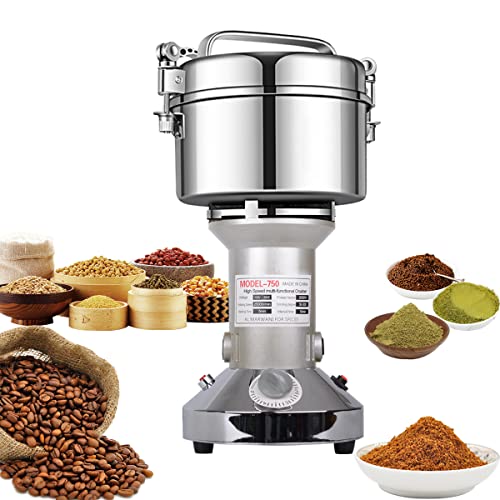
The 750 g LEJIEYIN model features a 2000 W motor, triple-blade configuration, and a high-speed rotation (up to 25000 rpm). It is positioned as a multipurpose dry grinder suitable for grains, coffee beans, and spices. Like others in the line, it emphasizes safety with automatic overload protection and a recommended rest period after continuous use. Achieves 50–300 mesh fineness quickly, with a caution to ensure materials do not exceed two-thirds of the jar.
TK Tartle Kitchen Commercial Grinder 750W
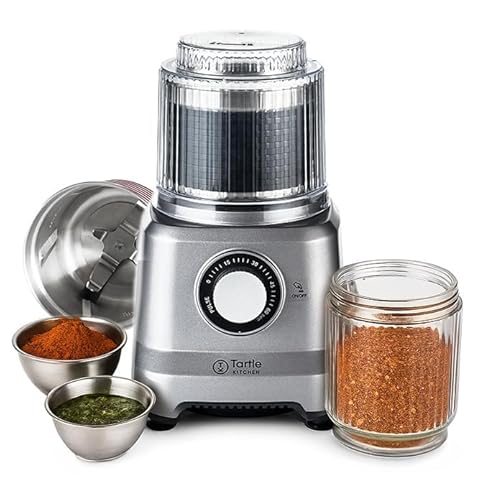
This 750W commercial spice grinder is designed for heavy-duty kitchen use, delivering full-bodied aromas of freshly ground spices and herbs. It includes two large-capacity stainless steel grinding cups with sealable lids for grinding and storing ingredients to maintain freshness. It offers a 0–60 second timer with 15-second increments and a pulse mode for controlled texture, enabling repeatable results and efficient batch processing in professional settings.
Waring WSG30 Commercial Spice Grinder

The Waring WSG30 offers a high-performance 19,000 rpm motor in a medium-duty stainless steel housing with a safety interlock lid. It’s built for reliable daily grinding of spices, seeds, and nuts, with pulse actuation to dial in grind size and consistency. This model targets professional kitchens that require steady throughput and predictable results with straightforward operation.
1000G Electric Grain Grinder Mill (Swing-Type)

The 1000G swing-type model emphasizes ease of pouring and handling during grinding. It touts a 29000 rpm speed with a 1000 g capacity, designed to produce 50–300 mesh powder in short sessions. Like comparable machines, it requires dry materials and includes a three-blade configuration to improve grinding efficiency. The device is suitable for households venturing into small-scale commercial-style grinding workflows or professional kitchens with moderate demand.
Buying Guide: Key Purchase Considerations For Commercial Spice Grinders
- Material and build: Look for a stainless steel exterior and food-grade components to ensure durability and safety in a commercial environment. A robust motor reduces downtime and replacement frequency.
- Capacity and throughput: Choose a grinder with a capacity that matches your daily needs. Larger capacities reduce batch frequency but may take up more space.
- Grinding fineness and consistency: If your recipes require specific textures, verify the mesh range (e.g., 50–300 mesh) and whether the grinder supports consistent outputs across batches.
- Safety and protection: Overload protection, safety interlocks, and automatic shut-offs help protect workers and extend equipment life. Consider models with reset options after overload.
- Multi-use capabilities: Some units handle grains, spices, herbs, and coffee beans. Ensure the model you choose aligns with the materials you plan to process and their dryness.
- Operational guidelines: Note recommended operation intervals (for example, grinding up to 3 minutes with rest periods) to prevent motor overheating and prolong life.
- Ease of cleaning and maintenance: Removable parts, accessible blades, and straightforward disassembly contribute to quick cleaning—critical in foodservice settings.
- Noise and heat management: High-speed grinders can generate significant heat; check for built-in cooling considerations and user safety guidelines to protect staff.
When evaluating options, align the grinder’s features with your kitchen’s workload, space, and safety protocols. For high-volume operations, prioritize models with larger capacities, robust safety protections, and programmable textures. For boutique or restaurant kitchens, look for precision control and timer functions to produce repeatable results. Always factor in maintenance accessibility and availability of spare blades or replacement parts to minimize downtime.